
Equestrian sport has deep roots in Saudi Arabia, and today it is growing rapidly, from international show jumping events to private stables and community riding clubs. As more arenas are built, owners are discovering that the surface horses work on is just as important as the horses themselves.
Arena footing affects performance, training consistency, and above all horse welfare. A poor surface leads to slips, uneven loading of joints, tendon strain, and costly time off for injured horses.
Common Problems With Sand Arenas
- Uneven depth: sand moves to the edges and corners, leaving the track deep in some places and hard in others.
- Deep tracks: hooves sink unpredictably, increasing strain on tendons.
- Hard base exposure: where sand thins out, horses hit the compacted base.
- Poor drainage: after rain or heavy watering, puddles and mud make the arena unusable.
- Dust: loose, dry sand creates dust that affects horses’ respiratory health.
What a Stabilization Grid Does
An arena stabilization grid is laid between the drainage base and the riding surface, or within the footing layer. Its cells hold the sand in place so it cannot migrate, and they give the surface consistent support and grip. Because the grid is open, water drains straight through to the base below.
- Even surface: sand depth stays consistent across the whole arena.
- Shock absorption: flexible polymer cells cushion impact during landing and turns.
- Reliable grip: hooves get stable support without slipping.
- Instant drainage: no standing water or mud after rain or irrigation.
- Less maintenance: less frequent re-levelling and sand top-ups.
A Typical Arena Build-Up
- Subgrade: excavated, graded with a slight fall, and compacted.
- Drainage: perforated drains where needed and a layer of clean crushed stone.
- Separation: geotextile over the stone to keep sand out of the drainage layer.
- Stabilization grid: panels laid and connected across the arena.
- Footing: washed, angular arena sand at the specified depth, sometimes with fibre additives.
Beyond the Arena
The same grids work in paddocks, lunging rings, walkways between stables, and wash-down areas. In paddocks they prevent the muddy, churned ground that forms around gates and water troughs, which in turn reduces hoof problems.
Managing Heat and Dust
In the Saudi climate, regular watering keeps dust down and maintains the right moisture for grip. A stabilized, free-draining arena uses this water efficiently because it spreads evenly through the footing instead of pooling.
An Investment in Horse Welfare
A well-built arena may cost more initially, but it protects horses, reduces vet bills, and supports better training. For equestrian centres competing to host events and attract riders, the quality of the footing is a clear mark of professionalism.
Recommended Ayana Products
Explore products that may support the landscape application discussed in this article.
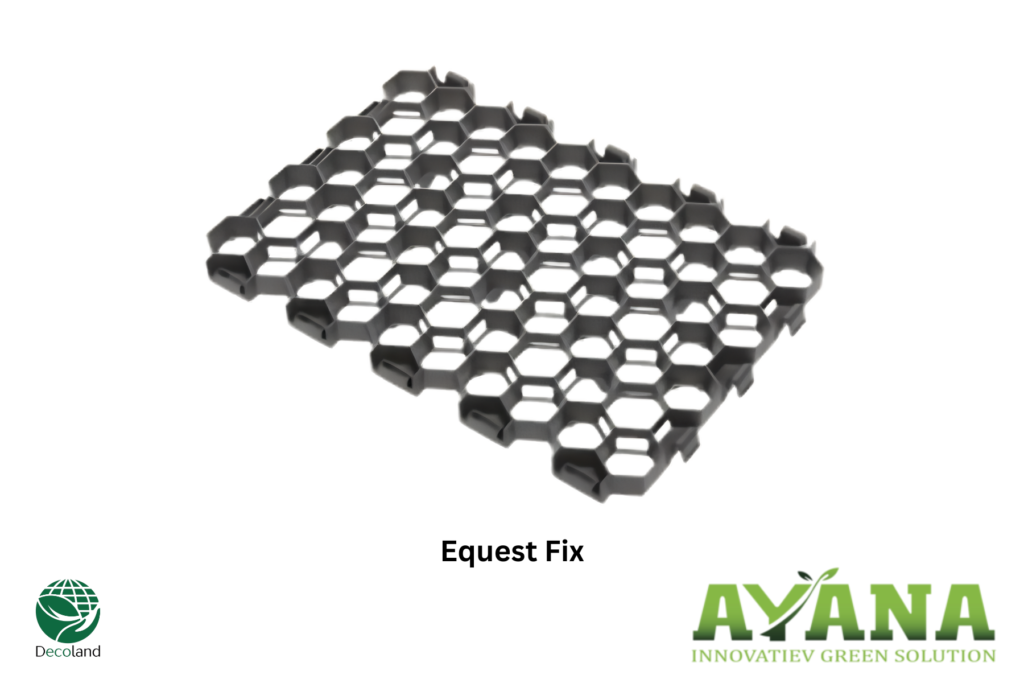
Equest Fix®
Heavy-duty grid system made from recycled, impact-resistant CoPo polymers for arenas, paddocks, and stables.
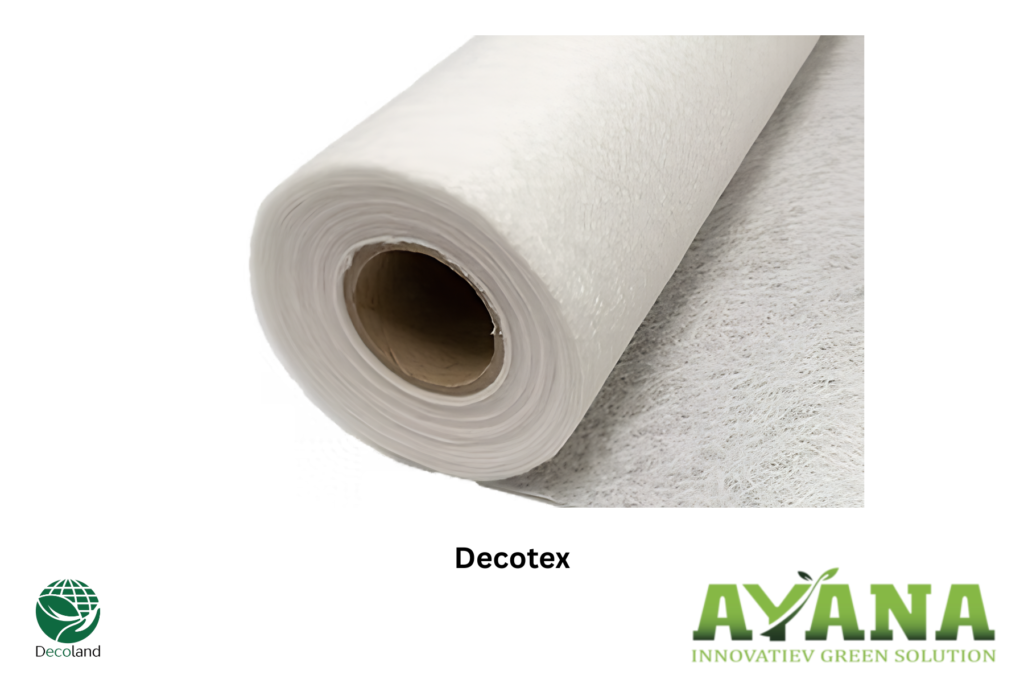
Decotex Non-Woven Geotextile
Needle-punched polypropylene separation and filtration fabric.