Sustainable landscaping has become an important approach to developing outdoor spaces in Saudi Arabia. As cities continue to grow and environmental awareness increases, landscape design is moving beyond traditional aesthetics toward solutions that use resources more efficiently and respond to local environmental conditions.
What Is Sustainable Landscaping?
Sustainable landscaping is a design and implementation approach focused on creating attractive outdoor environments while reducing unnecessary resource consumption and maintenance requirements.
In Saudi Arabia, sustainable landscaping is particularly relevant because of high temperatures, limited water resources, and the need for outdoor spaces that can perform effectively under challenging climatic conditions.
Choosing the Right Plants
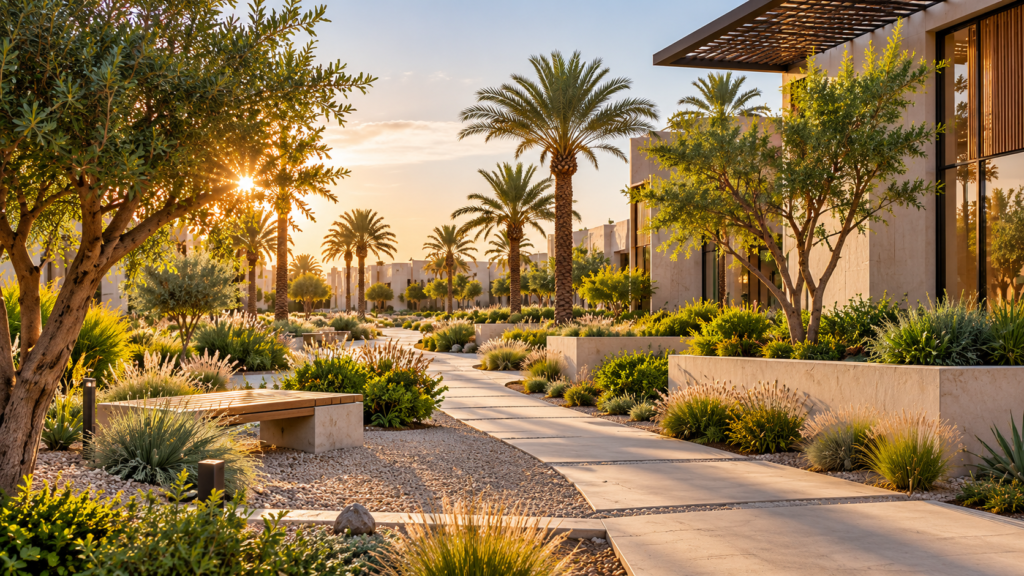
Plant selection is one of the most important elements of sustainable landscape design. Plants that are well adapted to local environmental conditions can require less water and maintenance while providing long-term visual and functional value.
A balanced combination of trees, shrubs, groundcovers, and other suitable plants can also improve shade coverage and create a more comfortable outdoor environment.
Efficient Water Management
Modern irrigation systems are essential for sustainable landscape projects. Drip irrigation and smart irrigation controllers can help deliver water more accurately to areas where it is needed.
Landscape zones can also be designed according to the different water requirements of plants. This approach helps avoid unnecessary irrigation and can improve the overall efficiency of the system.
Sustainable Hardscape Solutions
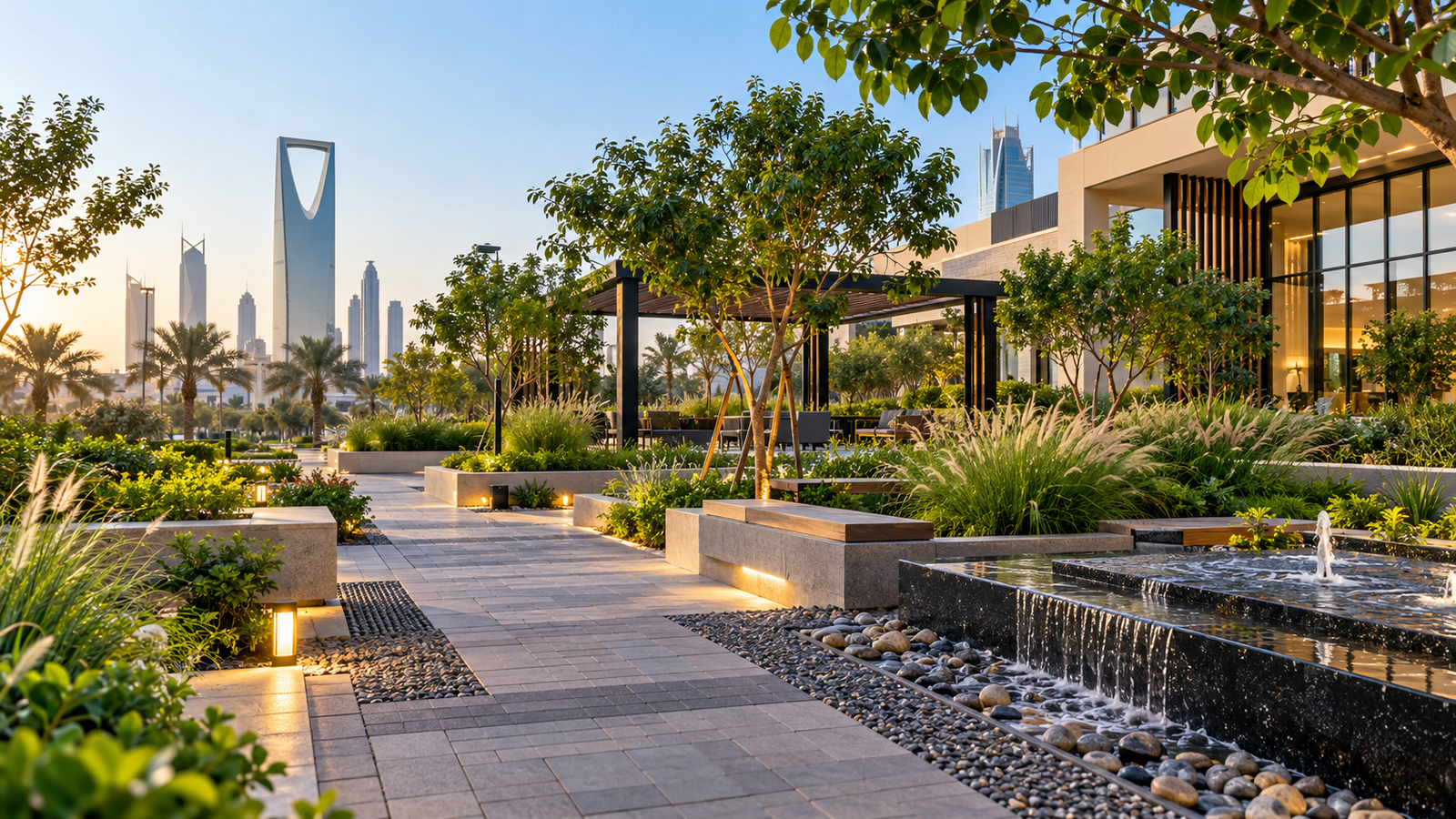
Sustainability in landscape design is not limited to plants and irrigation. Hardscape elements such as paving, walkways, outdoor seating areas, and other structural features can also influence the environmental performance of a project.
Permeable paving solutions can be incorporated into suitable projects to allow water to pass through the surface and support more effective stormwater management. Combining hardscape and softscape elements can also create functional and visually balanced outdoor environments.
Designing for the Saudi Climate
Outdoor spaces in Saudi Arabia need to be designed with high temperatures and strong solar exposure in mind. Trees, shaded seating areas, carefully positioned pathways, and appropriate landscape structures can help create more comfortable environments.
Thoughtful site planning can improve the usability of outdoor spaces while supporting the long-term performance of the landscape.
Sustainable Landscaping and Saudi Vision 2030
Sustainable landscaping supports the broader direction toward greener, more livable, and environmentally responsible communities across Saudi Arabia.
By combining thoughtful design, efficient irrigation, appropriate plant selection, and suitable landscape materials, outdoor projects can provide aesthetic and functional value while using resources responsibly.
Conclusion
Sustainable landscaping provides a practical approach to developing outdoor environments across Saudi Arabia. From efficient irrigation and climate-appropriate plants to carefully selected paving and hardscape solutions, every element can contribute to a more efficient and resilient landscape.
At Ayana Innovation Green Solutions, we believe successful landscape design starts with understanding each site’s requirements and transforming them into practical solutions that combine beauty, functionality, and sustainability.